Working while studying in Germany as a Nepali student in 2026 - visa rules, 140/280-day limit, Minijob vs Werkstudent, EUR 13.90 wage, first-job steps.
This is Part 8 of 9 in the Study in Germany series for Nepali students. The other parts cover the overview, choosing a university, admission requirements, language requirements, financing your studies, the visa process, your first two weeks in Germany, and life after graduation.
Last reviewed: May 2026. German wage rules, tax allowances, and visa conditions change. Verify each figure with the official source linked in that section before you plan around it.
Working while studying in Germany sounds simple until your first paycheck reveals what a Minijob actually is, why your German classmate pays almost no social insurance and you might, and what the Auslanderbehorde meant by that line about 140 days. This guide sorts it out. It covers the rules a Nepali student lives under in 2026: what your visa lets you do, how the four real job types differ, what you can realistically earn at the new EUR 13.90 minimum wage, and where to find your first job without breaking your timetable.
If you are still earlier in the journey, our series overview walks through every stage from picking a university to your first month after arrival. This post picks up once you are enrolled and ready to earn.
What Your Student Visa Actually Lets You Do
Three documents matter. First, the visa stamped in your passport. Second, the residence permit (Aufenthaltstitel) you converted it into after arrival. Third, the supplementary sheet (Zusatzblatt) that spells out conditions. The residence permit and its Zusatzblatt are what controls your day-to-day work rights.
For Nepali students who entered on a full Visum zu Studienzwecken, the standard condition is: up to 20 hours per week during the lecture period, and unlimited hours during semester breaks. This mirrors the rule for German students. Source: Make it in Germany, Study and work.
If you arrived on a Studienbewerbervisum (prospective-student visa), the rules used to be far more restrictive. Since 1 March 2024 the same 20-hour weekly limit now applies during the application phase too, which is a meaningful change for students still in Studienkolleg or B2 prep. The visa journey is covered step by step in our visa-process guide.
Pure Sprachkursvisum holders (language-course-only visas) typically cannot take paid work. If that is your status, confirm with your local Auslanderbehorde in writing before signing any contract.
The 140 Full Days / 280 Half Days Rule, in Plain English
Alongside the weekly cap, German law gives international students an annual allowance. The exact wording from Make it in Germany: "International students are permitted to work up to 140 full days or 280 half-days per year without requiring the approval of the Federal Employment Agency (BA). A working day of up to four hours counts as half a working day."
Two practical implications follow:
- Half-day arithmetic. If most of your shifts are short (an evening Mensa shift, a 3-hour library shift, a Saturday retail block under four hours), you can stack many more of them before hitting the cap.
- The HiWi exemption. If you take a position at your own university as a Studentische Hilfskraft (SHK) or Wissenschaftliche Hilfskraft (WHK), that work does not count against the 140/280-day quota. You can run a HiWi role plus a separate part-time job in parallel.
The limit was raised from 120 full / 240 half days to today's 140/280 in the 2024 Skilled Immigration Act reform. It is the federal-level number. Your individual residence permit could carry a stricter condition, so always read the Zusatzblatt.
The Four Kinds of Student Jobs That Matter
Most student work in Germany falls into one of four categories. Each has its own tax and social-insurance treatment, and choosing the right one changes your real take-home pay by hundreds of euros a month.
| Type | Hours / earnings limit | Take-home | Best for |
|---|---|---|---|
| Minijob | EUR 603/month ceiling (2026) | Near-full gross, no employee tax or insurance | Cafes, retail, Lieferando, Mensa shifts |
| Werkstudent | 20 hr/wk lecture period, unlimited semester break | Gross minus 9.3% pension only (no KV/PV/AV) | Office-side roles, engineering, IT, finance |
| HiWi (SHK/WHK) | Up to 19 hr/wk at the university, outside 140/280 quota | Gross minus pension contribution | Lab work, library, tutoring, research support |
| Aushilfe / freelance | Above Minijob, below Werkstudent limits | Lohnsteuer Klasse I (refundable below allowance) | Tutoring outside your uni, weekend events |
The Werkstudent category is the most valuable one once your German reaches B2 and you have completed a semester or two. It is the only status where the 9.3% pension share is your only mandatory contribution. The Werkstudentenprivileg exempts you from health, care, and unemployment insurance on the job, and you keep your separate student health insurance from arrival (covered in our first-two-weeks post).
One catch with the Werkstudent privilege. You can exceed 20 hours per week only during official semester breaks, and only for a rolling cap of 26 weeks per year (182 days). Cross that line and the privilege drops for the rest of the year, after which full social-insurance contributions apply.
What You Can Realistically Earn at EUR 13.90 an Hour
On 1 January 2026 the statutory minimum wage rose to EUR 13.90 per hour, the largest single-step increase in German history, set by the BMAS on the Mindestlohnkommission's recommendation. It applies to almost every student job: Mensa shifts, retail, delivery, most HiWi roles. From 1 January 2027 it rises again to EUR 14.60.
What that looks like in practice during the lecture period:
- Full 20 hours/week: around EUR 278/week before tax, or roughly EUR 1,200/month gross.
- Werkstudent at 15 hours/week: around EUR 835/month gross, minus 9.3% pension leaves about EUR 757 net.
- Single Minijob: capped at EUR 603/month, paid out almost in full.
- HiWi at 8 hours/week: around EUR 450 to EUR 600/month depending on Bundesland and degree level, exempt from the 140/280-day quota.
No single role covers your full living budget. The EUR 11,904 annual blocked-account requirement set by the Auswartiges Amt (EUR 992/month for 2026) is the floor for a reason. A student job is a meaningful supplement, not a replacement for a real funding plan.
Tax, Social Insurance, and the Refund Most Students Miss
Once you have an Anmeldung certificate (covered in our first-two-weeks post), the Finanzamt automatically issues a Steuer-Identifikationsnummer (Steuer-ID) to your registered address within two to three weeks. Every employer needs this number before processing your first payslip.
You start in Lohnsteuerklasse I as a single person. Your employer withholds wage tax (Lohnsteuer) from each paycheck, but here is the part most international students miss. The Grundfreibetrag (basic tax-free allowance) for 2026 is EUR 12,348 per year. If your total annual income stays below that, every cent of income tax withheld is refundable when you file an annual Steuererklarung. Most students never owe income tax. The money is sitting with the Finanzamt waiting to be claimed.
The social-insurance treatment depends on the job type:
- Minijob: the employer pays a lump-sum charge; you usually owe nothing.
- Werkstudent / HiWi: only 9.3% pension is deducted from your gross.
- Regular employment above Minijob limits: full Krankenversicherung, Pflegeversicherung, and Rentenversicherung apply, which is why crossing into that bracket as a student rarely pays off in net terms.
How to Actually Find Your First Job in Germany
Three job channels stack the odds in your favour. Use them in this order:
- Your own university. Each Lehrstuhl (academic chair) and institute lists HiWi vacancies on its Stellenangebote page. Departments usually fill these through internal mailing lists before posting publicly. Ask your professor or course supervisor by week six of your first semester.
- Studierendenwerk job boards. The local Studierendenwerk runs Mensa, library, and dormitory reception jobs that welcome A2 to B1 German speakers. Many also host a city-wide Stellenborse.
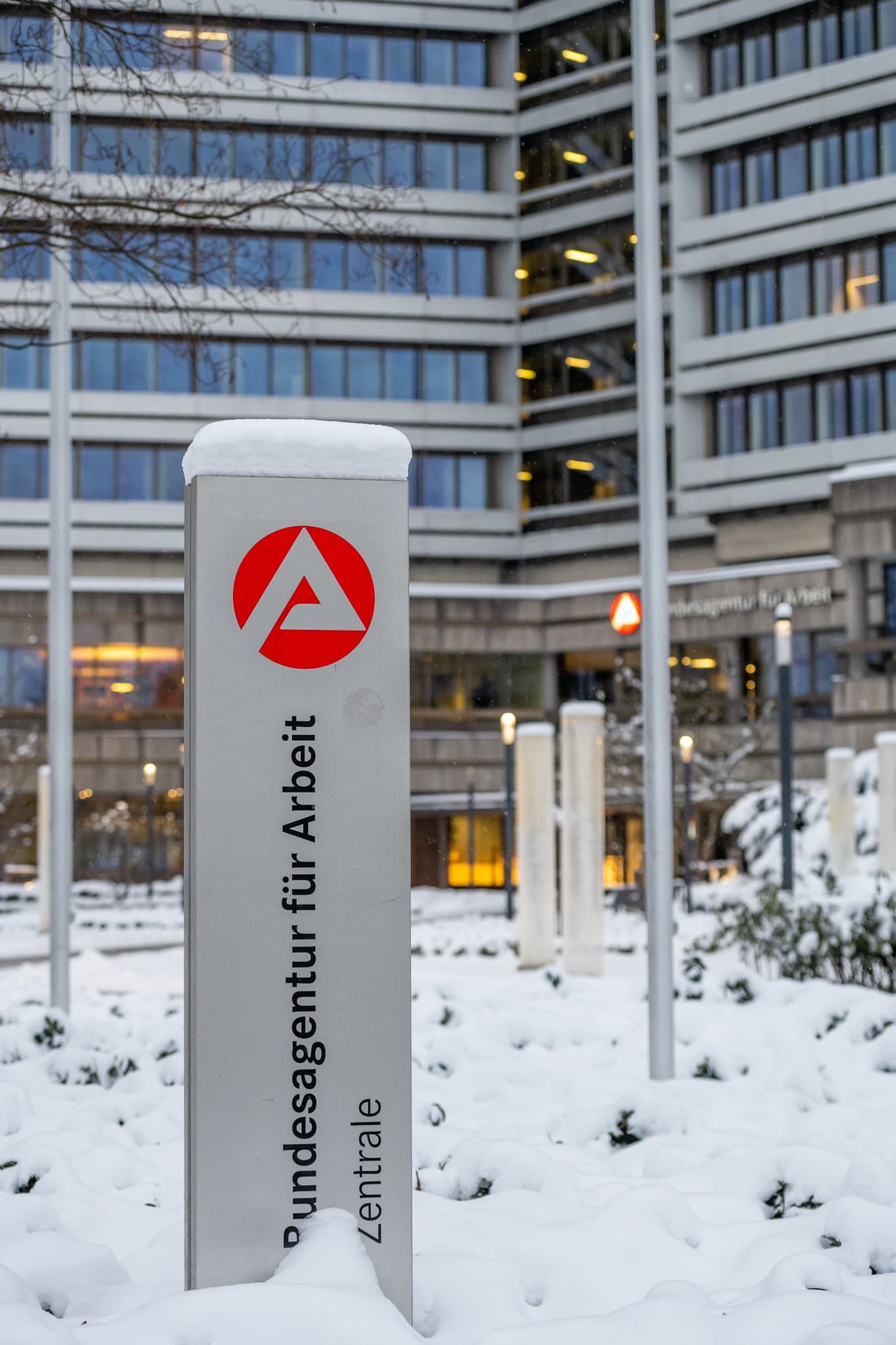
- Bundesagentur fur Arbeit Jobborse. The federal employment agency's official portal filters by Werkstudent and Minijob and is free.
For Werkstudent roles at companies, LinkedIn, StepStone, and Indeed dominate. Most office postings ask for B2 German. If you are still working toward that level, our language-requirements guide maps out the certificate ladder Goethe, telc, and the rest follow. Exam-format practice on SagaDeutsch closes that gap faster than open conversation tools because the question shapes match what testing centres actually use.
Application format detail. German Bewerbungen typically include a one-page tabellarischer Lebenslauf (CV) and a one-page Anschreiben (cover letter), both in German. Most companies still expect a small passport-style photograph on the CV. Universities usually accept English Lebenslaufe for HiWi roles.
A practical 30-day rhythm: finish Anmeldung and open the bank account in week one, prepare a German Lebenslauf and Anschreiben in week two, apply to HiWi listings and the Studierendenwerk board in week three, expand to Bundesagentur Jobborse and LinkedIn in week four. When you sign your first contract, notify your Auslanderbehorde if your residence permit's Zusatzblatt requires it.
Frequently asked questions
Yes. The 20-hour weekly cap applies only during the lecture period. During official semester breaks (Vorlesungsfreie Zeit) you can work full-time without losing student status, as long as the total stays inside 140 full days or 280 half days per year. HiWi work at your own university does not count against this quota at all.
It depends on your German level and goals. A Minijob (up to EUR 603/month in 2026) is easier to land with A2 or B1 German and pays out almost in full. A Werkstudent role pays more in absolute terms, usually relates to your degree, and the 9.3% pension contribution is the only deduction. Most office Werkstudent postings ask for B2 German. Many students start with a Minijob and switch to Werkstudent once B2 is in hand.
Often yes, depending on the wording of your residence-permit Zusatzblatt. Some permits require advance notification for any employment above the Minijob threshold; others only ask self-employment to be registered. Check the supplementary sheet that came with your Aufenthaltstitel and call your local Auslanderbehorde if anything is unclear before signing a contract.
All three are student-assistant roles paid by your university. SHK (Studentische Hilfskraft) is for students without a degree. WHK (Wissenschaftliche Hilfskraft) requires a Bachelor's or higher and pays more. HiWi is the umbrella nickname for both. Hourly rates are set per Bundesland and per degree level; many universities currently pay between EUR 14 and EUR 20 per hour.
It can if you exceed the limits. The 20-hour weekly cap exists because German immigration law treats studies as your primary purpose. Auslanderbehorden have revoked residence permits for students who shifted to working far more than studying. Stay inside the cap, prioritise exam dates, and a part-time job becomes an asset rather than a risk.