Germany has 423 higher education institutions and over 22,000 degree programs. Learn how to choose the right one as a Nepali student, including the truth about APS, Studienkolleg requirements, and how uni-assist works. Part 2 of our Study in Germany series.
This is Part 2 of 9 in the Study in Germany series for Nepali students. The other parts cover the overview, admission requirements, language requirements, financing your studies, the visa process, your first two weeks in Germany, working while you study, and life after graduation.
You've decided Germany is your destination - now comes the harder question: which university and which program? With over 423 higher education institutions and more than 22,000 degree programs to choose from, the German system can feel overwhelming, especially for Nepali students applying from abroad.
This is the second post in our Study in Germany series. (Read the introduction here if you missed it.) In this guide, we'll break down the German higher education landscape, show you where to search using official sources, and address the questions specific to Nepali applicants - including the truth about APS that most consultancies get wrong.
The Three Types of Higher Education in Germany
Before you start browsing universities, you need to understand that not all German "universities" are the same. There are three main types, each with a different focus:
1. Universität (Research Universities)
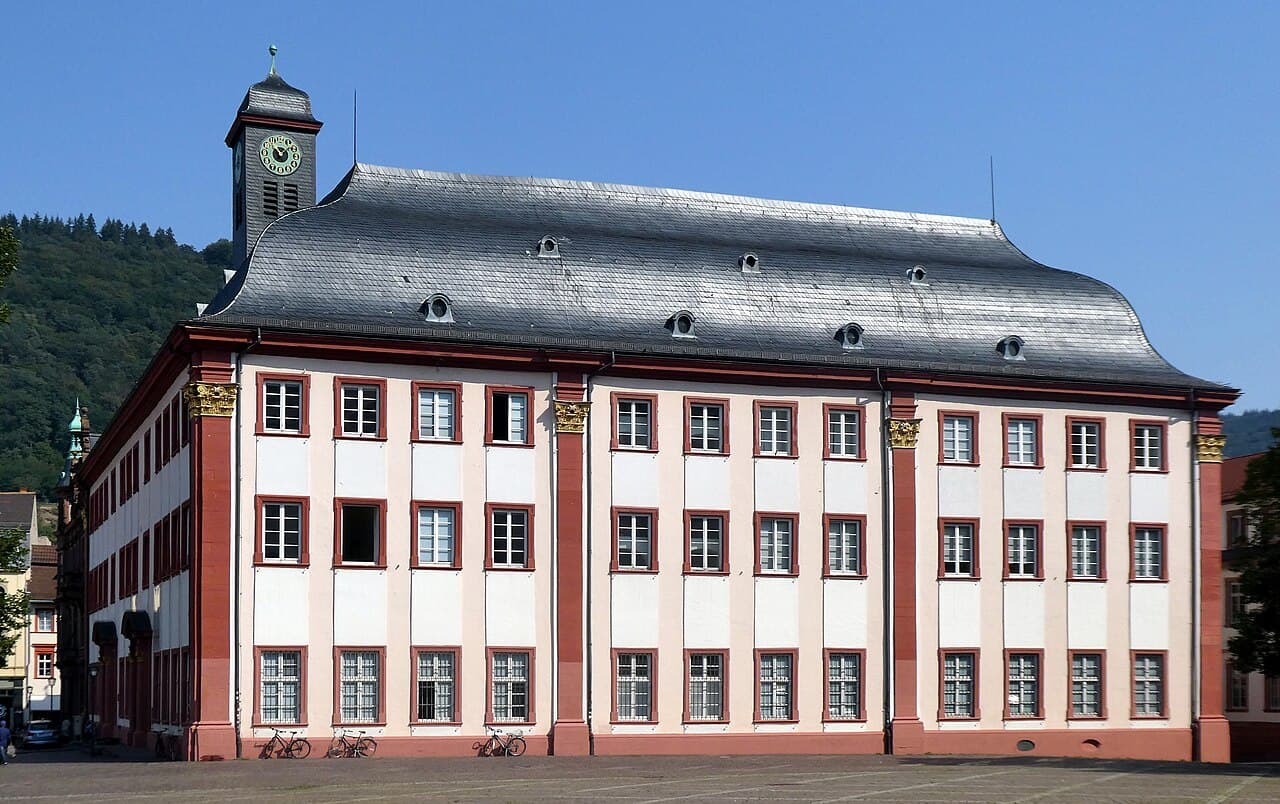
These are the classical research-focused universities. Think Heidelberg, LMU Munich, Humboldt Berlin, the Technische Universitäten (TUs).
- Focus: Theoretical knowledge, research, and methodological depth
- Degrees: Bachelor, Master, PhD (these are the only institutions with full doctoral conferral rights)
- Best for: Students aiming for research careers, PhDs, or academic depth in their field
- Number: 108 institutions in Germany
2. Fachhochschule / Hochschule für Angewandte Wissenschaften (HAW / FH)
Universities of applied sciences. About 40% of all German students are enrolled in this type of institution.
- Focus: Practice-oriented education with mandatory practical semesters, internships, and strong industry partnerships
- Degrees: Bachelor and Master (limited PhD options in some states)
- Subjects: Engineering, business, social work, design, media, healthcare
- Best for: Career-oriented students who want applied skills and direct employability after graduation
- Number: 211 institutions, including around 158,000 international students
3. Kunst-, Musik- und Filmhochschulen (Art, Music, and Film Colleges)
Specialized institutions for fine arts, design, music, film, and performing arts.
- Focus: Creative and performing arts
- Admission: Requires demonstrated talent through portfolio review or entrance exam (Eignungsprüfung)
- Number: 52 institutions across Germany
Quick rule of thumb for Nepali students: If you want to work in industry after graduation (engineering, IT, business), an HAW/FH or one of the TU9 universities is often the most practical choice. If you're aiming for research, academia, or a PhD, go with a classical Universität.
Where to Search: Official Portals Only
Skip the consultancy websites and use these official German sources. They're free, accurate, and updated regularly:
DAAD (German Academic Exchange Service)
Website: daad.de/en
The DAAD is the official German government agency for international academic exchange. Their degree program search covers approximately 22,000 programs across all German universities. They also maintain an admission database for around 140 countries (Nepal included) where you can do a non-binding eligibility check.
Hochschulkompass
Website: hochschulkompass.de/en
The official database of the German Rectors' Conference (HRK). Data is entered and maintained by the institutions themselves, making it the most authoritative source on what each German university actually offers.
DAAD International Programmes
Website: www2.daad.de/deutschland/studienangebote/international-programmes
This is the database to use if you're specifically looking for English-taught programs. It focuses on internationally oriented Bachelor, Master, PhD, and preparatory courses.
anabin (Recognition of Foreign Qualifications)
Website: anabin.kmk.org
Maintained by the Central Office for Foreign Education (ZAB). Use it to check whether your Nepali university and your degree are recognized in Germany. Look for "H+" status under "Institutionen" and an equivalence class under "Abschlüsse".
Bachelor's vs Master's: The Language Reality
Here's the part most blog posts gloss over: the language of instruction depends heavily on the level of study.
Bachelor's Programs
The vast majority of Bachelor's programs in Germany are taught entirely in German. While there are around 300 English-taught Bachelor's programs, that's a tiny fraction compared to the roughly 2,000+ German-taught ones.
For Bachelor's admission, you'll typically need:
- B2 or C1 German (proven via TestDaF or DSH)
- Standard duration: 6 semesters (3 years)
Master's Programs
Master's is where English-taught programs really open up. There are approximately 1,800 to 2,000 English-taught Master's programs in Germany, particularly strong in:
- Engineering and Computer Science
- Natural Sciences
- Business and Economics
- Public Policy and International Relations
For English-taught Masters, you'll need IELTS or TOEFL instead of (or in addition to) German. Standard duration is 2 to 4 semesters (1 to 2 years).
Recommendation: Even if you're applying for an English-taught Master's, learn at least B1 German. It will make daily life, part-time work, and post-graduation job searches dramatically easier.
Top German Universities by Field

Here are the universities that consistently rank at the top in their respective fields, based on official rankings (QS, THE, CHE):
Engineering and Technology - The TU9 Alliance
The TU9 is the official alliance of Germany's leading technical universities. If you're studying engineering or applied sciences, these nine universities are the gold standard:
- RWTH Aachen University
- Technische Universität Berlin (TU Berlin)
- Technische Universität Braunschweig
- Technical University of Darmstadt (TU Darmstadt)
- Technische Universität Dresden (TUD)
- Leibniz University Hannover
- Karlsruhe Institute of Technology (KIT)
- Technical University of Munich (TUM)
- University of Stuttgart
TUM ranks #17 globally in QS Engineering & Technology 2026, with RWTH Aachen at #33.
Computer Science and IT
- TUM (#20 globally in QS CS 2026)
- KIT
- RWTH Aachen
- Saarland University (renowned for AI and computer science research)
- TU Berlin
Business and Economics
- University of Mannheim - Germany's #1 in business, ranked #33 worldwide in THE Business and Economics 2026
- Frankfurt School of Finance & Management
- WHU Otto Beisheim School of Management
- ESMT Berlin
- HHL Leipzig
Natural Sciences and Medicine
- LMU Munich - 43 Nobel laureates, the most of any German university
- Heidelberg University - Germany's #1 for medicine and life sciences
- University of Göttingen - around 47 Nobel laureates historically; strong in mathematics, physics, biology
- TUM and KIT - strong across natural sciences alongside engineering
Specifically for Nepali Students
This section addresses the most common questions and misconceptions for applicants from Nepal.
About APS - Setting the Record Straight
You'll see many Nepali consultancies claiming you need an APS (Akademische Prüfstelle) certificate to study in Germany. This is not currently true for Nepal.
According to the official uni-assist glossary, APS currently operates in only three countries: China, Vietnam, and India. Nepal is not on this list. The official German Embassy Kathmandu student visa page does not require an APS certificate from Nepali applicants.
Important caveat: The list of APS countries has expanded several times in recent years (India was added in 2022, and expansion to other South Asian countries is regularly discussed). Always verify the current requirement on kathmandu.diplo.de before each intake. Don't take a consultancy's word for it.
Is 10+2 Enough? (No - Here's Why)
Your Nepali 10+2 / HSEB / Plus Two qualification alone is generally not recognized as a direct higher education entrance qualification in Germany. To pursue a Bachelor's degree in Germany, you typically need either:
- Two or three semesters of comparable university study completed in Nepal, OR
- Completion of a Studienkolleg (foundation course) in Germany followed by passing the Feststellungsprüfung exam
For Master's programs, you need a recognized Bachelor's degree (usually 6 semesters / 180 ECTS minimum).
Studienkolleg: The Foundation Course Path
If you're applying directly after Plus Two, the Studienkolleg is your most likely path. Here's how it works:
- Duration: Typically 2 semesters (shorter for high performers)
- Entry requirement: Minimum B1 German (some require B2)
- Final exam: Feststellungsprüfung (which gives you the equivalent of a German Hochschulzugangsberechtigung)
Studienkolleg courses are specialized by your intended field of study:
- T-Kurs - Technical and engineering subjects
- M-Kurs - Medicine and biology
- W-Kurs - Economics and social sciences
- G-Kurs - Humanities
- S-Kurs - Languages
Checking if Your Nepali University is Recognized
Before applying anywhere, look up your Nepali institution and degree on anabin.kmk.org:
- Under "Institutionen": Your university should show "H+" status (recognized)
- Under "Abschlüsse": Your degree should appear in an equivalence class
If your institution or degree isn't listed, you'll need to request a Statement of Comparability (Zeugnisbewertung) from the ZAB.
How to Apply: The Three Application Routes
1. uni-assist (the most common path)
Website: uni-assist.de/en
uni-assist processes around 350,000 international applications per year for over 180 member universities. The process has six steps: gather information, plan your application, assemble documents, apply online via my.uni-assist.de, pay the application fee, then send and track.
Some universities require uni-assist for all international applications. Others only need it for a preliminary review document (VPD - Vorprüfungsdokumentation), which you then use to apply directly to the university. Use the uni-assist tool to check what your target university requires.
Warning: uni-assist explicitly states it does not cooperate with commercial agencies. Apply only through their official site.
2. Direct Application
Some top universities accept applications directly through their own portals. Examples include TUM (TUMonline), LMU Munich, Heidelberg, and many programs at FU Berlin. Always confirm on the official admissions page of your specific program.
3. Hochschulstart (for nationwide restricted subjects)
Website: hochschulstart.de
Mandatory for: Human Medicine, Veterinary Medicine, Dentistry, and Pharmacy. Non-EU students (including Nepalis) typically apply through the university or uni-assist under a separate international quota, but coordination still flows through Hochschulstart for these restricted subjects.
Quick Decision Framework
Use this table to narrow down your path:
| Your Goal | Best Institution Type | Typical Path |
|---|---|---|
| Research career or PhD | Universität (TU9, LMU, Heidelberg) | Bachelor in Nepal then Master, or Studienkolleg then Bachelor |
| Industry-ready engineering or CS | HAW/FH or TU9 (TUM, RWTH, KIT) | Apply via uni-assist for German Bachelor, or English-taught Master |
| Business / MiM / MBA | Mannheim, Frankfurt School, WHU, ESMT | Direct application to the school |
| Art, music, or film | Kunst-, Musik-, or Filmhochschule | Portfolio submission or audition (Eignungsprüfung) |
| Medicine, pharmacy, or dentistry | Universität with medical faculty | Hochschulstart with international quota rules |
Your Action Plan
- Verify your qualification on anabin.kmk.org
- Search for programs on DAAD or Hochschulkompass (filter by language, level, and subject)
- Check entry requirements for each program in DAAD's admission database for Nepal
- Confirm application route (uni-assist, direct, or Hochschulstart)
- Note the deadlines: Winter semester (October start) typically closes July 15. Summer semester (April start) typically closes January 15. Some programs have earlier deadlines
- Start your German language preparation immediately, regardless of your program's language
What's Next in This Series
Now that you understand how to choose a university and program, the next post will cover the complete admission requirements for Nepali students - documents you need, how to use uni-assist step by step, deadlines for each intake, and how to handle credential recognition.
While you're researching universities, this is the perfect time to start building your German language foundation. Practice with realistic Goethe-Zertifikat exam questions on SagaDeutsch across all CEFR levels from A1 to C2. The earlier you start, the stronger your application will be.
Ready for the next step? Read Admission Requirements for Nepali Students Applying to German Universities - the complete guide to documents, Studienkolleg, uni-assist, and deadlines.